Review
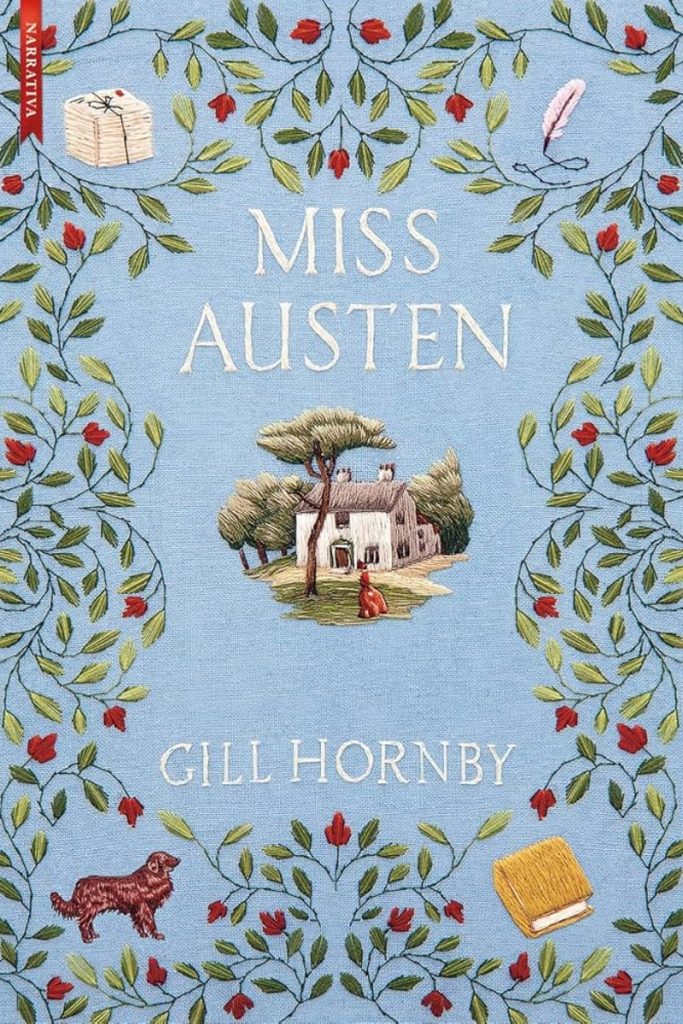
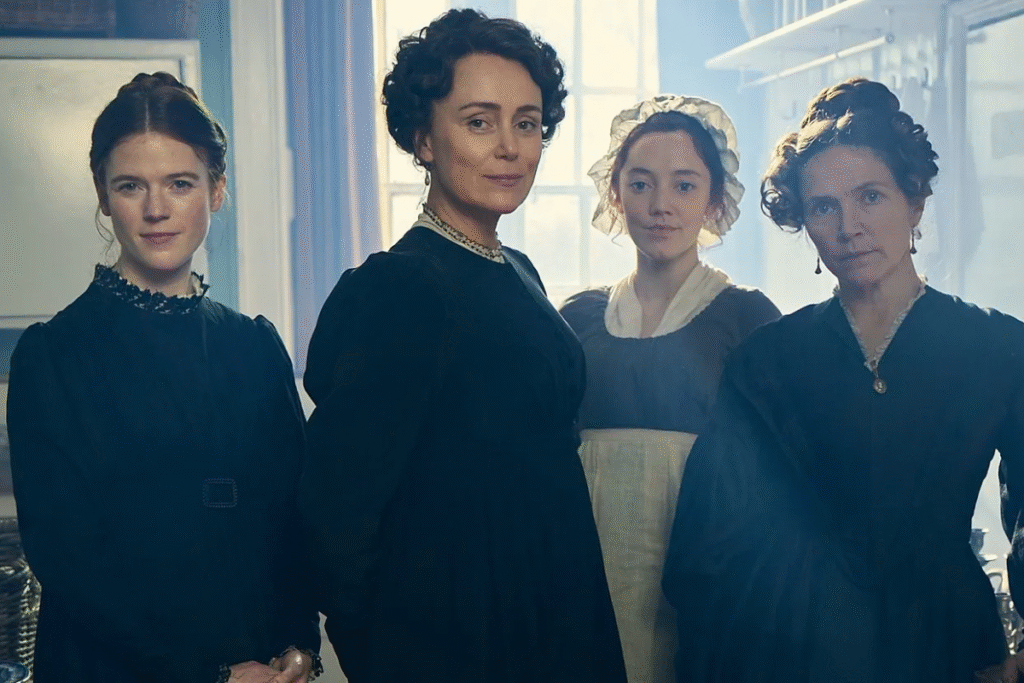
Miss Austen is a four-part historical television series from Bonnie Productions, Federation Stories and Masterpiece which tells the story of why Cassandra Austen burned her sister’s personal letters after her death. The series stars Keeley Hawes as Cassandra, Jessica Hynes as Mary Austen, and Rose Leslie as Isabella Fowle. It is an adaptation of the novel Miss Austen by Gill Hornby which also examines the precarious security of women who remained unmarried. While Keely Hawes is obviously a lot younger than Cassandra in the book, it is forgivable as the casting and whole production is excellent. The sisterly love between Cassandra and Jane positively shines through the series and the scenes where Jane passes away with her sister curled up by her side are genuinely heartbreaking.
In the opening episode, Cassandra Austen receives a letter from Isabella Fowle advising that her father, the Reverend Fulwar Fowle, is dying, and Cassandra immediately rushes to Kintbury where she and her sister, Jane, spent so many happy days during their childhood. Cassandra arrives at the vicarage late at night which takes Isabella and her maid, Dinah, by surprise. Cassandra insists on seeing Fulwar who is being attended to by his doctor, Mr. Lidderdale, and it is obvious there are sparks between Lidderdale and Isabella. As Isabella sees the doctor out, Fulwar makes Cassandra promise she will ensure Isabella lives with her sisters when he is gone. After his death, Isabella introduces Cassandra to Mr. Dundas (Thomas Coombes), the new vicar, who enthuses about Jane’s books and declares a biography of her life is needed. Mary Austen, who has arrived for the funeral, thinks a biography is a wonderful idea and suggests her son would be a good choice to write it. Mary tells them she will return to the vicarage in the morning to collect her sister’s correspondence with Jane. As soon as Mary leaves, Cassandra finds Eliza’s letters and takes them to her room to read.
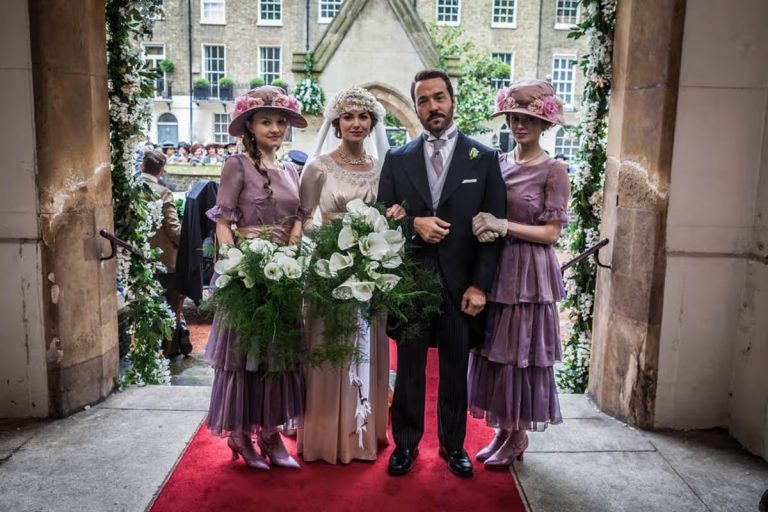
In a flashback, Cassandra recalls her engagement to Fulwar and Mary’s brother, Tom, and Jane’s worry that it would drive a wedge between them. Jane and Cassandra have always had a close relationship and Cassandra reassures her she won’t be far away. Not long after the engagement, Tom announces he is leaving on a long excursion to secure their future and tells Cassandra he has been promised his own parish on his return. Tom persuades Cassandra to visit Eliza at Kintbury while he is away and reveals he has left her everything in his will. As the vicarage becomes a flurry of wedding activity, Cassandra’s mother is scheming to find a new wife for her son, James, who has been widowed. Mrs. Austin favours the idea of Mary Fowle as a suitable wife and Jane is shocked when Cassandra supports it as neither sister cares for Mary. The fact Jane had hesitations about the marriage comes as news to Cassandra as she reads the letter her sister wrote to Eliza.
Cassandra Austen has long been a controversial figure for those who love the works of Jane Austen as she was responsible for destroying many of Jane’s letters after her death. However, Cassandra destroyed the letters to protect Jane’s legacy and her protectiveness toward her sister is very evident from the first episode. When both Mr. Dundas and Mary Austen call for a biography of Jane, Cassandra simply replies everything they need to know about Jane can be found in her books. The story is told from the viewpoint of the present with flashbacks back to the time when Jane was still alive and these blend seamlessly together. I really like the casting of the actresses who play the younger versions of Cassandra and Jane as their bond is so believable.
The following day, Mary arrives back at the vicarage and asks Cassandra about Jane’s letters to Eliza, however Cassandra lies and says she has not found them yet. Isabella is distraught at having to leave her home, especially as the new vicar is keen to move in as soon as possible due to the fact his wife is pregnant. Eager to have Isabella’s situation resolved, Cassandra takes it upon herself to visit Isabella’s eccentric sister, Mary Jane, who seems under the impression that Isabella will definitely be living with her as she could never cope on her own. Cassandra gently points out that Isabella is unaware of that. Cassandra then visits, Beth, Isabella’s other sister, who is a teacher, although her school is currently closed. Beth is helping Lidderdale care for a woman with diphtheria and tells Cassandra she does not want to get involved with Isabella’s problems.
At the start of the third episode, a seriously ill Cassandra is being nursed by Isabella and her maid, Dinah, and is rambling on about Jane’s letters in her delirium. Isabella reassures her there are no letters, but Cassandra insists they must be hidden and Mary overhears everything. Cassandra feverishly flashes back to Devon and a conversation she had with Henry Hobday, an new acquaintance, about loss and he reveals his mother is reluctant to return to their Derbyshire estate after the death of his father. When Cassandra returns to her family, her brother, Frank, newly arrived, teases her about her acquaintance with Henry but Cassandra reacts with anger. Jane later tells Cassandra that a future with Henry would be better than the fate that would befall her if she chooses to stay with Jane. As spinsters, Jane and Cassandra would be poor and treated as objects of pity.
When Henry proposes to Cassandra, she rejects him as she made a vow to Tom that she would never marry another and does not want to leave her sister. A furious Jane writes to Eliza saying Cassandra is deliberately throwing away her chance at happiness. The Austen sisters visit their friends Catherine and Alethea Bigg-Wither (Ellie McKay and Ruby Richardson), who live on a wealthy estate in Hampshire. Their shy brother, Harris (Tom Glenister) becomes enamoured with Jane and proposes to her. When Jane accepts his proposal, Cassandra is shocked as she knows Jane does not reciprocate his feelings but Jane admits she accepted so Cassandra would be free to marry Henry. When Cassandra points out that her sister will be too busy having children and managing the estate to do any writing, Jane breaks off the engagement. Back home, the sisters are devastated when their father decides to retire and they have to leave Steventon which puts them in a precarious financial situation. The fate of unmarried women having no income of their own is a recurrent theme in Jane Austen’s novels.
Determined the same fate will not befall Isabella, Cassandra visits Beth to express her hope that if Beth marries Lidderdale, Isabella will be allowed to move in with them. Beth finds this hysterically funny and tells Cassandra she has the wrong sister. With the truth now dawning, Cassandra hurries back to Isabella and apologises for misreading the situation between Beth and Lidderdale. Isabella then confesses that her father had not approved of her relationship with Lidderdale and she had been forced to turn down his marriage proposal as a result. Isabella is sure Lidderdale would never propose again as he was deeply offended the last time and his pride would not allow it. The main story regarding Isabella’s attachment to Lidderdale is similar to the plot of Persuasion as any prospect of a marriage between Anne Elliot and Frederick Wentworth was thwarted by disapproval from others and Anne’s acceptance of it.
As Cassandra helps Mary Jane and Isabella look for suitable lodgings, she tells them how important it is to have a garden and a room where Isabella can continue teaching. Cassandra remembers moving into the new lodgings in Southampton with her mother and Jane, and the despair they all felt. Jane, still suffering from depression, is convinced her new novel Sense & Sensibility will never be published. Things get worse when their brother, Edward, loses his wife in childbirth and Cassandra immediately leaves for Kent to help with the other children. Edward begs Cassandra to stay with him and the children, but she says her duty lies with Jane and their mother. Instead, she offers him a solution while making it seem like it was his idea. If Edward gives them a cottage at his estate in Chawton, Hampshire, they could all see each other when Edward and his family go there to stay. The new cottage proves to be perfect for them and has a little writing desk for Jane.
Mary Jane and Isabella also find the perfect house and Isabella professes she will be happy there, but her spirits are soon dashed when Lidderdale tells them he is leaving the village. Isabella wishes him well but it is clear she is devastated by the news. Back at the rectory, Isabella asks Cassandra to continue reading Persuasion and as she is reaching the part where Louisa has her horrible fall, Dinah, listening at the door, gets an idea. Dinah dramatically throws herself down the stairs, and as Cassandra rushes to help, she orders Isabella to get Lidderdale. After Lidderdale treats Dinah and makes to leave, he suddenly turns around and kisses Isabella passionately. Cassandra, having seen through Dinah’s accident, congratulates her on a job well done.
Back upstairs, Cassandra goes through Jane’s letters and pulls out the ones where Jane was melancholy, leaving the happier ones for Mary to find. In one last flashback, we learn that Sense & Sensibility was indeed published, and was soon followed by Pride & Prejudice, Mansfield Park and Emma. However, Jane’s health is deteriorating at an alarming rate and the doctors are unable to say why. Hoping to find a cure, Cassandra takes her on a series of visits before heading to Winchester. In grave pain, Jane takes to her bed and tells Cassandra she does not want the world to remember her for her suffering. She wants to be remembered for the joy that her books brought to her readers. Jane praises Cassandra for being a devoted sister and says they were blessed to have had each other before quietly slipping away.
In the present, Cassandra is delighted when Isabella tells her she has accepted Lidderdale’s proposal. As Cassandra is saying her goodbyes, Dinah slips her a letter she overlooked and Cassandra gives hints to Mary where the rest of the letters might be. Cassandra says their history is safe in their memories and they can pass it on to future generations. Mary says no one will be interested in their stories as they are only women. As Cassandra leaves in her carriage, she opens the letter Dinah passed to her and learns Jane wrote to Eliza asking her to look after Cassandra after she was gone. Jane tells Eliza she is glad she is the one going first as she could not have beared to live without her dear sister by her side. Later, Cassandra burns Jane’s letters to keep her secrets out of the public eye.
The final episode in the series is heart-wrenching as Jane falls into a slow decline and Cassandra devotes herself to caring for her sister. As Cassandra curls up with Jane during her last moments, the bond between them is very evident and it is very moving to witness Cassandra’s despair. Back in the present, Cassandra’s grief at the loss of Jane is still very raw and it goes a long way in explaining her protectiveness. While many may bemoan the loss of those letters, I believe Cassandra did the correct thing.
Further Reading
Explore the characters and books that inspired the series