Review
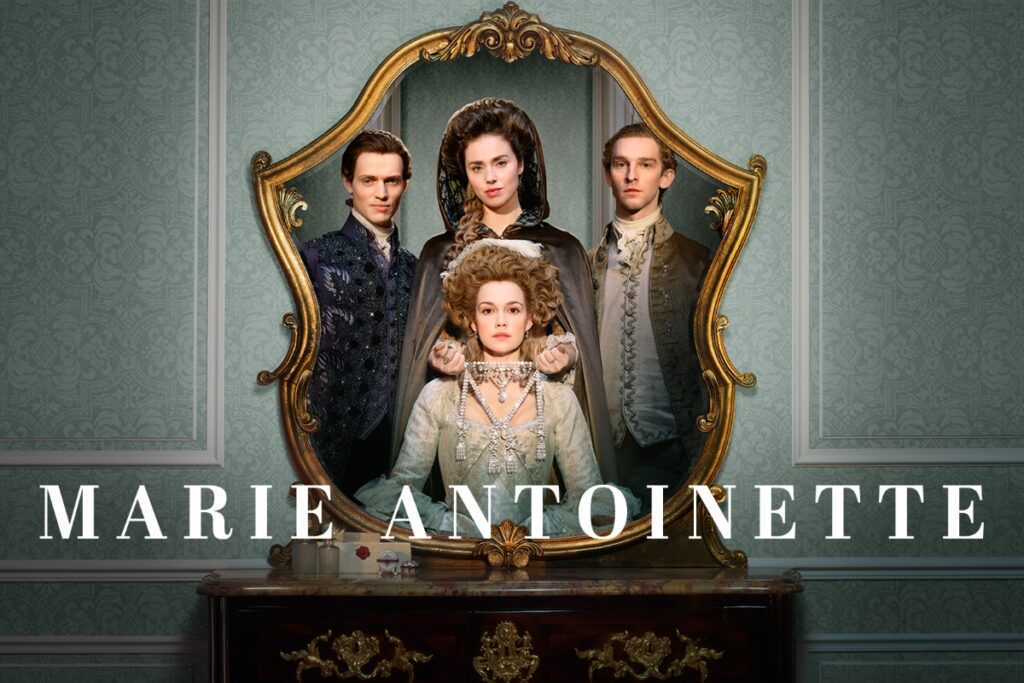
Marie Antoinette is a British-French historical drama, created and written by Deborah Davis, and produced by Canal+ and the BBC, following the life of France’s most infamous queen. The second series premiered on the BBC on 8 May 2025 with Emilia Schüle and Louis Cunningham resuming their roles as Marie Antoinette and Louis XVI respectively.
At the start of the second season, Louis XVI has been on the throne for ten years and Marie Antoinette is expecting their third child, however the government is in serious debt as a consequence of the support given to the American Revolution. As Louis hides the extent of the financial crisis from the people of France, he faces numerous attacks from his brother, Provence, and his cousin, Chartres, who have their own desire to be king. However, France is experiencing one of its hardest winters and hunger is driving many to desperation. As the series progresses, Louis and Antoinette find themselves becoming increasingly unpopular as the flames of revolution are stoked across the country.
There are a lot more plot threads to follow in this season, however Emilia Schüle and Louis Cunningham continue to impress as a Louis and Antoinette who have grown more into their roles as monarchs since the first season, however they are still hiding secrets that threaten to tear them apart. As the series progresses, the royal couple become increasingly trapped in the machinations of others and bad choices threaten to make things worse. Oscar Lesage is deliciously wicked as Chartres and Freya Mavor adds another layer of deceit as Jeanne de la Motte who is at the centre of the famous diamond necklace affair.
In the first episode, Antoinette spots a man freezing to death on a doorstep and stops to help him, however a crowd of destitute people quickly gathers and she is bundled back into the carriage. Back at Versailles, Antoinette begs her husband to release more money to help the starving people but the Marquis de Lafayette is looking for more funds for the American Revolutionary War. Louis refuses Lafayette’s request as he feels he has already contributed plenty to the cause, however he is hiding the fact that the treasury is severely depleted. Alone in her chambers, Antoinette writes secret letters to Fersen in lemon juice and keeps them in hidden in a secret compartment of her desk drawer that only Yolande knows about. Louis and Antoinette decide to make Yolande a duchess as a reward for her continued loyalty. However, Yolande continues to promote her own self-interest as she schemes to get her friend Calonne appointed as Louis’ financial controller so he will have access to public funds to pay her debts.
One of the most famous legends associated with Marie Antoinette is the Affair of the Diamond Necklace where she was falsely accused of acquiring a very expensive diamond necklace from the court jeweller and then refusing to pay for it. In reality, the queen had refused to buy the necklace but her signature was forged by Jeanne de la Motte who was later convicted. The scandal was very damaging to the monarchy and was significant as one of many events that led to the revolution. On the series, Jeanne arrives at court dressed as a noble woman and hears rumours the court jeweller has brought a diamond necklace to court for the queen. Jeanne sneaks into Antoinette’s private apartments but finds the compartment with the love letters. Unaware the stationery has secret writing on them, Jeanne takes them along with a sketch of the necklace and some other trinkets.
When Antoinette discovers her letters have disappeared, she immediately suspects Yolande and asks her aide, Breteuil, to find the thief but doesn’t tell him that Yolande also knows about them. Antoinette summons Yolande, but she is too busy arranging for Calonne to ‘accidentally’ bump into the king after he has said goodnight to the children. Annoyed with Yolande, Antoinette goes searching for her but collapses in agony in a deserted corridor. While Louis and Calonne are deep in discussion, Yolande glimpses Antoinette on the ground through an open door but closes it as Louis insists she join him and Calonne in his chambers. Lamballe witnesses the whole thing and rushes to help Antoinette who has miscarried. Later, Lamballe warns Yolande that she will eventually tell the queen that Yolande left her for dead.
Louis is upset at the loss of his baby daughter but continues to make bad decisions when he appoints Calonne as his financial controller, despite seeing through Yolande’s manipulations. Vergennes, the court adviser, warns the king that the court won’t like it, but Louis doesn’t care. Calonne urges the king to increase investments by raising taxes on the clergy and nobility but Louis refuses. Yolande’s growing deceit opens the door for Lamballe to return to Antoinette’s side and it is nice to see her being appreciated once again. Meanwhile, Jeanne continues to collect donations for fallen women, but is also using the opportunity to observe the court and sees Cardinal Rohan being rebuffed by the queen. Hoping to take advantage of a powerful man to help her acquire the diamond necklace, Jeanne decides Rohan is the perfect mark.
A faction at court led by Félicité is attempting to convince Chartres to start a rival court which could lead to a new constitutional monarchy that would grant more liberties to the people, however Chartres is lazy. Félicité uses the visit of a popular charlatan and physician, Cagliostro, to convince Chartres to host an evening with him at the Palais Royal. Cagliostro tells them he has had a vision of a new king being present in the room and both Chartres and Provence get excited. When Antoinette and Louis attend the premiere of Figaro in Paris, a mob gathers outside the Bastille calling Louis a despot which upsets him so much he goes for a ride and panic ensues when his horse returns riderless. Provence immediately tries to seize power as regent, but Louis eventually reappears with a sprained ankle. The whole incident makes Antoinette realise her position at court is precarious and she makes plans to protect herself.
After the death of his father, Chartres becomes the new duc d’Orléans and is welcomed back at Versailles so Louis can keep an eye on him. In a new position of power and with a large fortune into the bargain, Orléans loses interest in reforming the monarchy much to the dismay of Félicité. Antoinette makes plans to buy a home of her own since everything else is owned by the state and Breteuil tells her Saint-Cloud is available but it will be expensive. Antoinette is pregnant again but is unsure if Fersen or Louis is the father so she orders Fersen to stay away from court. Antoinette tells Louis she is pregnant when she asks for money to buy Saint-Cloud. Louis is shocked and has doubts over the child’s paternity, but the queen brushes them aside. When Louis sends Antoinette to Calonne to get the money, she tells him she is aware he is stealing money to pay Yolande’s debts so Calonne gives her what she wants.
Jeanne gives out bouquets of Antoinette’s favourite rose to all the courtiers at Versailles who have donated, making it look like the queen is thanking them personally but Lamballe is growing increasingly suspicious that Jeanne is an impostor. The roses make Rohan want to donate more so he can receive a less impersonal thank you from the queen. Jeanne has Villette forge Antoinette’s seal to she can write letters to Rohan as the queen and she uses the stationery she stole from the queen’s desk. Jeanne is invited to dinner with Rohan and finds Cagliostro is there too. Cagliostro and Jeanne see right through each other and Cagliostro warns her he is protective of Rohan who is his benefactor. They decide to be allies for now, knowing either could expose the other. Jeanne invites Lamballe for tea and admits she lied about being close to the queen. Playing on Lamballe’s insecurities, she ingratiates herself to the princess.
As if all the intrigue at court and the depleted economy isn’t enough for Louis to contend with, he learns the dauphin has a disease of the spine and will die within a few years. Unwisely, Louis decides to keep the truth from Antoinette, but he confides in Yolande who assures him she will help his son cope with the pain. Louis asks Yolande to do some research into Fersen’s family tree. Later, when Yolande reveals Fersen’s family seems to be healthy, she and Louis almost kiss. Feeling guilty, Louis agrees to let Antoinette have Saint-Cloud, and resigns himself to the possibility that Antoinette is carrying another man’s child. If it is a son, at least he will have a healthy heir. When Antoinette visits Saint-Cloud, she is startled to find Orléans there who wants to reconcile with her. Antoinette tells him she will never forgive him. So Orléans reveals he has evidence that the child she is carrying is Fersen’s. Antoinette slaps his face. In exchange for his silence, Orléans wants a marriage to be arranged between his son and her daughter. Antoinette tells him that her daughter will choose her own husband.
Back at Versailles, Antoinette gives birth to a son and Louis remains silent about his paternity. Orléans prints pamphlets lampooning Antoinette for her lavish purchase of Saint-Cloud and when she arrives for her first stay at the estate, she finds carriages burning in front of it and realises Orléans is poisoning the people against her. Antoinette cuts her hair and appears at court in a modest dress but her transformation is scorned and she realises nothing she does will ever please them. Antoinette decides to tell Louis that she loves Fersen, but he stops her from saying anything as he already knows. Louis tells her they must seize happiness where they can find it and Antoinette takes that as a sign Louis is giving his blessing for the affair to continue.
Meanwhile, Rohan gifts Jeanne a bejewelled bracelet and tells her Boehmer, the court jeweller, is planning to break up his diamond necklace because no one will buy it. Jeanne immediately sends a letter to Rohan from Antoinette asking him to buy the necklace for her as she can’t risk the public knowing that she bought it herself. Rohan responds to say he will only buy the necklace for the queen if they can meet in person. When Boehmer informs the king and queen that he has not received payment for the diamond necklace, Rohan is arrested. When questioned, Rohan maintains he bought the necklace on behalf of Antoinette and mentions their correspondence, but Antoinette has no idea what he is talking about. Before Rohan is taken to the Bastille, Antoinette asks him which charity he donated to and is told it was the one for fallen women. Jeanne manages to retrieve the fake correspondence from Rohan’s quarters before it is found by the guards.
Prosecutor Fleury is charged with leading the investigation and quickly determines the cardinal must have stolen the necklace, but Vergennes urges caution as the Rohan family are one of the wealthiest and most powerful families in the country. But Antoinette demands a public trial to clear her name. When Vergennes visits the cardinal in jail, Rohan insists he bought the necklace for the queen. Louis supports his wife, but he also knows his proposed land tax on the nobility will anger any who are called to serve on the jury. Later, Provence searches through Louis’ papers and finds the proposal for the land tax so he sends word to the Marquis de Malherbe. The investigation into the theft of the necklace exposes Jeanne’s fake charity and she is arrested while trying to escape Versailles.
The Rohan family arrive en masse at Versailles and Madame de Rohan demands that her great-nephew be released or suffer the consequences. Antoinette tells her any damage done to the Rohan name is the fault of the cardinal and Louis tells the Rohans that he’s putting the cardinal on trial. Jeanne blames the cardinal for both the disappearance of the necklace and for creating the fake charity. Antoinette, watching the interrogation from the shadows, encourages Jeanne to testify against Rohan. The queen is not sure if Jeanne is telling the truth, but Fleury says she’s credible enough for a jury. Lamballe warns Antoinette not to trust Jeanne as she is so cunning but Antoinette tells the princess that she doesn’t want her at the trial if she won’t support her.
As the trial begins, Madame de Rohan accuses Orléans of using the trial as propaganda against Louis and threatens to denounce him as a traitor if the cardinal is found guilty. Unfortunately, Orléans knows that they can’t prove the cardinal’s innocence unless Villette is located. As Antoinette watches the trial behind a screen, the cardinal insists he bought the necklace on the queen’s behalf because he wanted to get back into her favour. Later, when Fleury asks Antoinette about the cardinal’s accusations, including the meeting in the garden, she realises she can offer no alibi as she was with Fersen at the time. As the trial resumes, Jeanne testifies the cardinal exploited her innocence to solicit donations for his fake charity and that she knew nothing of the necklace. The trial is complicating things for Louis as the Parlement is currently sitting as jury and the rumours regarding a land tax are making them dither over their decision.
When the trial resumes, Target accuses Jeanne of being the mastermind behind everything, but she says the cardinal boasted about his private visits to the queen and her numerous lovers. Louis, watching from behind a screen, leaves in a fury but Antoinette insists on staying. Orléans is not pleased with this twist as he wants the cardinal acquitted, and Félicité reveals she knows the whereabouts of Villette but will only tell Orléans if he promises to give equal rights to women when he becomes king. Villette refuses to damage Jeanne’s reputation but he is taken to the Bastille to see for himself that she is still alive. Jeanne tries to convince Villette they need to stick together in order to save both of their lives, but he later testifies that he forged the letters and posed as the queen’s guard on behalf of Jeanne.
Antoinette realises the jury will perceive Rohan as a fool conned by Jeanne and will likely acquit him, so she suggests he be charged with damaging her reputation which is a capital offence. Target defends the cardinal, saying that none of the accusations against the queen are new since she has damaged her own reputation by allowing rumours of her affairs and profligate spending to spread. Malherbe tells Provence that the jury is split, but they do not want to empower Orléans by turning in a verdict against the king’s wishes. As it turns out, Jeanne is found guilty of theft and sent to prison for life. Villette is banished and the cardinal is acquitted. Louis banishes Rohan, while Fersen visits Orléans to accuse him of orchestrating everything because Antoinette will never love him.
Antoinette gives birth to a daughter, Sophie, but is left suffering from postpartum depression as she worries about the condition of her eldest son who is now confined to a wheelchair. Furious with Louis and Yolande for not telling her the truth. Antoinette remains in seclusion at Versailles as her reputation has been so damaged by the trial she may be in danger from the public and she is also being blackmailed by La Motte who is threatening to publish her love letters to Fersen. Antoinette is past caring, but Fersen warns her that any doubt cast on the paternity of her son would not be good for his future prospects as king.
Louis is also distraught after the sudden death of his adviser, Vergennes, however he presents his proposal to tax the nobility and clergy to an Assembly of Notables who have been handpicked for their loyalty. Ironically, Orléans finds the reforms refreshingly democratic, so it is left to Provence to block the proposal on behalf of his allies in Parlement. When the Assembly of Notables prepares to pass the reforms, Provence asks why the extra money is needed and they want to see the budget which would expose the debt Louis has been trying to hide. When Louis tells Provence, they both try to prevent the budget from being shown but Calonne decides to reveal everything.
When Louis finds out what Calonne has done, he denounces him as a traitor before grabbing back the budget papers. Provence tells Louis that he looks deranged which is exactly what he wanted. When Louis reveals the extent of the debt to Antoinette, she is furious with him for keeping it from her but she tells him he has her support. Louis dismisses Calonne and Antoinette asks Breteuil to educate her on the workings of government so she can act in Louis’ stead as he has convinced himself he is no longer fit to rule. Antoinette summons Malherbe and tells him that Louis will stop pushing for reform if Parlement approves a loan but the loan is refused. Orléans takes advantage of the situation to accuse Louis of being a despot and he becomes the people’s hero. Meanwhile, Antoinette dismisses Yolande after learning from Lamballe that Yolande witnessed her miscarriage and chose to leave her alone to ensure Calonne was installed as the finance controller. Louis also banishes Orléans from Versailles, but it only makes Orléans more popular amongst the people.
Antoinette brings Necker back as financial controller despite the fact he got them into this mess but things get worse when Antoinette’s youngest daughter, Sophie, dies unexpectedly. Fersen arrives at Versailles but Antoinette tearfully sends him away as she has no time to console him. A disastrous hailstorm ruins the crops leaving the rural poor short of food, and they begin moving towards Paris but the king has no money to help them. Breteuil suspects Orléans has been buying up grain, but they are powerless to move against him due to his popularity. Orléans manipulates the people further when he begins distributing bread to them which disgusts some of his friends who think he is taking advantage of a crisis. Necker asks Antoinette to persuade Louis to call the Estates General so the tax reform can be passed after all as it is their only hope.
Louis agrees to convene the Estates General for the first time in a century and Orléans continues to turn the screw by inciting riots in Paris. Louis gains some popularity when he makes a speech to the Estates General in favour of taxing the clergy and nobility, however the reforms get tied up in red tape when the third estate (the commoners) objects to a voting system that they say disadvantages them. Louis is advised not to intervene. Necker suggests Louis should write his own constitution offering the people some power, but Provence is appalled and tells Louis he must impose his authority. However, Louis has more on his mind when the dauphin dies and a grief-stricken Louis goes hunting. The third estate soon declares themselves a new National Assembly and begins drafting a constitution that will limit royal power.
Versailles comes under direct attack when rumours spread grain is being hoarded by Antoinette and Louis wants to send his family away to safety, however Provence insists they stay to project their power. Many others, including Yolande, decide to leave, but Lamballe stays with Antoinette. Antoinette summons Orléans to Versailles and asks him to mediate with the third estate but he tells her it is too late and walks away. Back in Paris, Orléans refuses to join the mob when they march on the Bastille to free political prisoners. He may be their hero but he does not believe commoners are his equals or that they really want to get rid of the monarchy for good. At Versailles, the royal family, protected by only a few loyal guards, sit alone as the mob approaches the gates.
Further Reading
Explore the characters and books that inspired the series